



Types of induction furnace coils according to the way of twisting
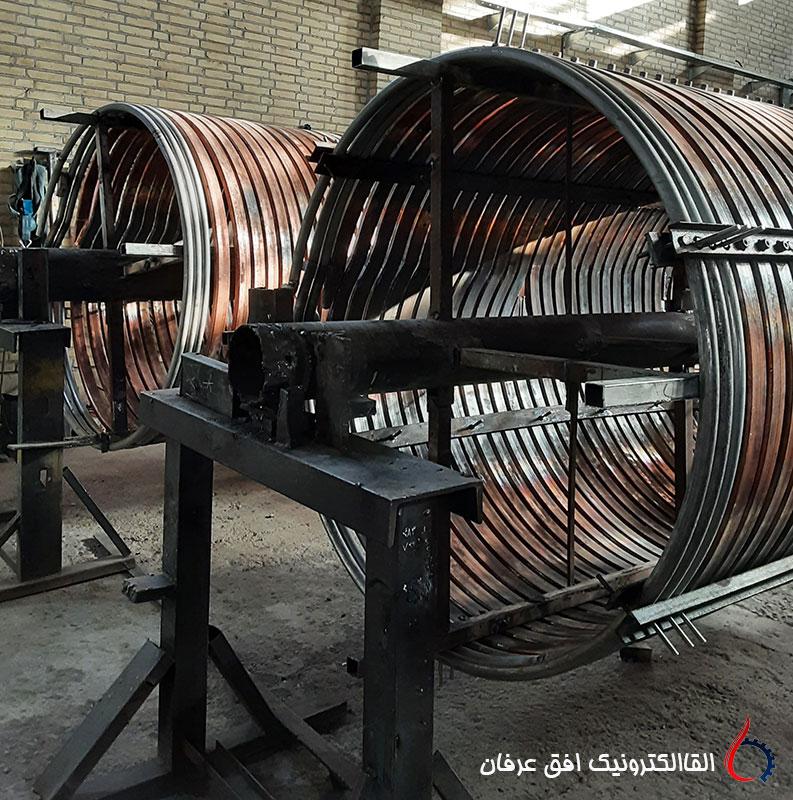
Induction furnace coils are wound in two ways. The first method is helical coils that are wound spirally from the beginning to the end. These types of coils do not provide a balanced and uniform applied magnetic field and heat to the materials under melting due to the angularity of their rings, therefore, the use of this type of induction furnace coils is mainly construct and used in lower dimensions and power levels and not recommended to use them on a larger scale. Also, the presence of non-uniform distances between the active coil parts and the lack of parallelism between the two upper and lower surfaces of the coil are other problems in the assembly and operation of helical coils.
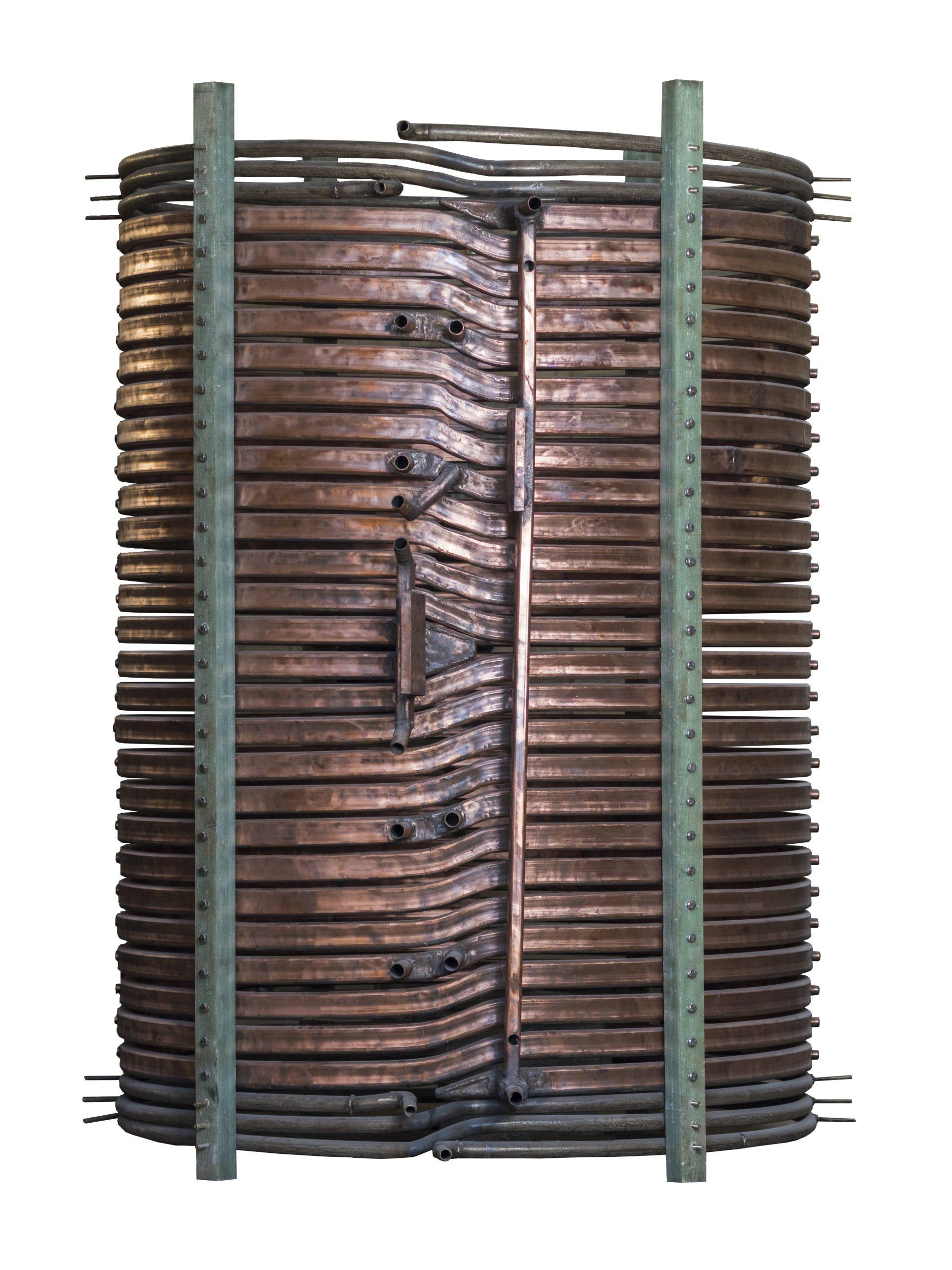
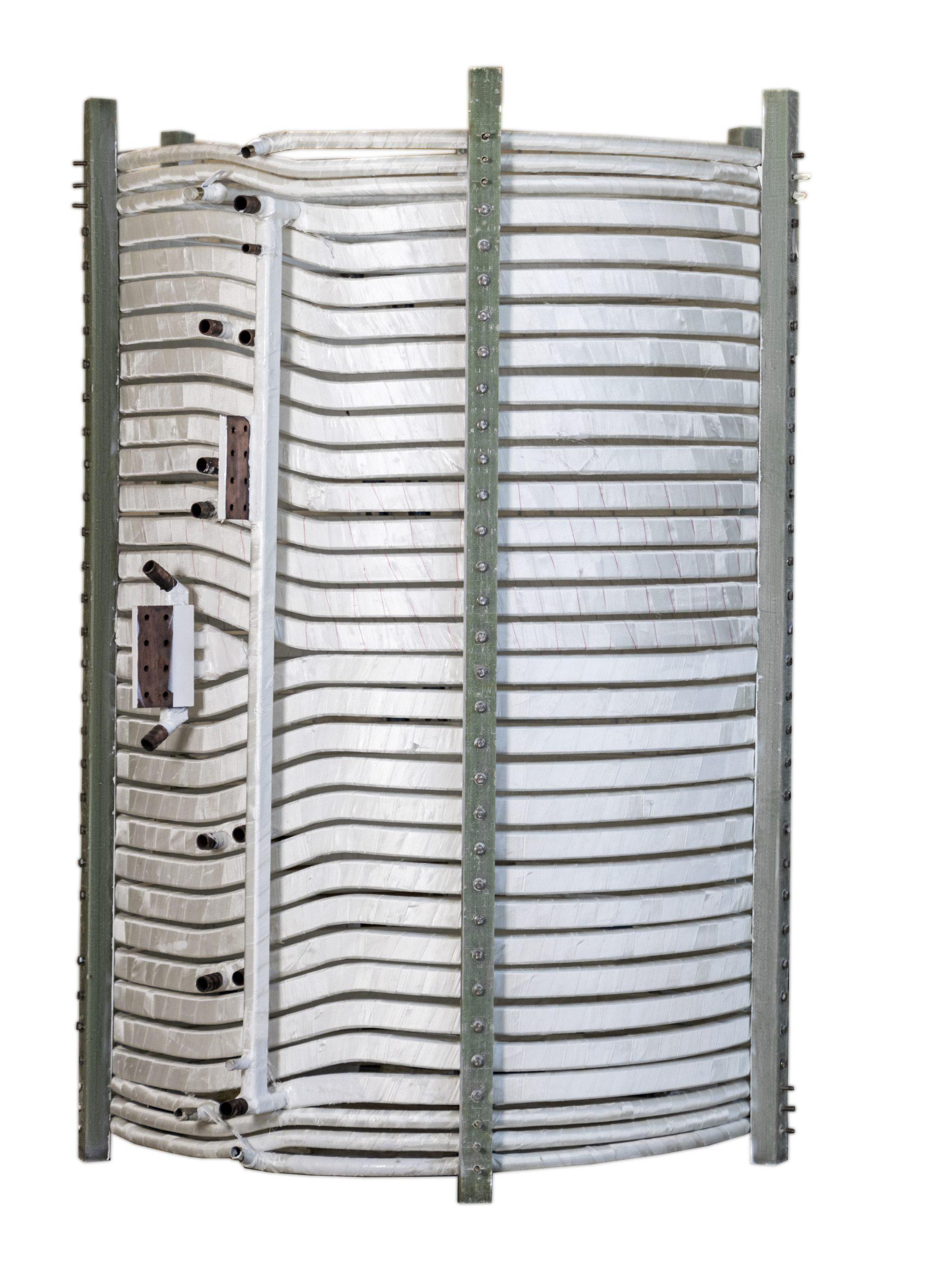
The second method is offset coils. Unlike helical types, these types of coils are made of flat rings that are wrapped in a kneeling (offset) shape to form a layer at the beginning and end of the rings. Therefore, in contrast to helical coils, in this category of coils, the upper and lower surfaces of coil is completely flat and parallel, and also applies a uniform magnetic field and heat to the material under melting, therefore, the use of this type of coil, especially in high powers and tonnages, is recommended.
Types of induction furnace coils according to assembly method
Induction furnace coils consist of one or more active parts, which are placed in parallel with each other. The active parts in the copper coils can be parallel to each other in two consecutive and two threads ways.
In the coils that are designed with consecutive actives, the active coil sections are placed sequentially and coaxially in one direction and are connected to each other, and finally either are electrically parallel to each other by using busbars on the coil or with the connections of the corresponding water cables.
In this case, the rate of coupling between two consecutive active parts is usually 20 to 40%.
In coils with double threads actives (which is usually common in coils with two active sections), the active sections are interwoven with each other, so that their rings are placed alternate way. In this case, the rate of coupling between the two parts of the active coil is close to 100%.
It should be mentioned that generally the two threads coils are wound helically.
No comment